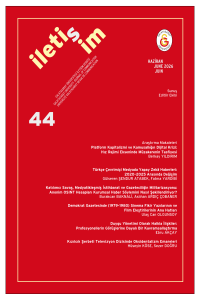
Research Article
BibTex RIS Cite

Game and Meaning: Analysis of Player Expectations and Experiences

Year 2025, Issue: 43, 167 - 190, 25.12.2025

Abstract

Technological, cultural, and social developments have begun to change media consumption habits for entertainment purposes. In particular, the literature frequently emphasizes that hedonic experiences make significant contributions to user experience. However, in the field of digital games and game studies, there has also been a shift away from the traditional perspective that views games merely as hedonic experiences providing pleasure and enjoyment. This study, therefore, aims to contribute to the field by revealing the eudaimonic effects of game experience beyond its hedonic aspects. In this descriptive research, a sample of 99 participants completed the Turkish version of the HEMA-R questionnaire, and the analysis was deepened through semi-structured questions. The findings demonstrate that hedonic and eudaimonic experiences are not opposing concepts, that eudaimonic experiences enhance memorability and the perception of appreciation/value, and that meaning within the gaming experience contributes to hedonic aspects such as pleasure and enjoyment.

Ethical Statement

The author declares that there is no conflict of interest. The decision taken at the meeting of the Bahçeşehir University Scientific Research and Publication Ethics Committee on 30.04.2025, numbered 2025/04, found that the research was appropriate from an ethical and scientific point of view.

Supporting Institution

The author declared that this study has received no financial support.

References

  • Bopp, J. A., Mekler, E. D., & Opwis, K. (2016, Mayıs). Negative emotion, positive experience? Emotionally moving moments in digital games. In Proceedings of the 2016 CHI conference on human factors in computing systems, 2996-3006.
  • Bopp, J. A., Opwis, K., & Mekler, E. D. (2018, Nisan). “An odd kind of pleasure” differentiating emotional challenge in digital games. In Proceedings of the 2018 CHI conference on human factors in computing systems, 1-12.
  • Bozdemir, M. (2023). Psychometric properties of the Turkish translation of the Hedonic, Eudaimonic, and Extrinsic Motives for Activities scale (HEEMA). Unpublished data.
  • Can, A. (2014). SPSS ile Bilimsel Araştırma Sürecinde Nicel Veri Analizi. Pegem Akademi Yayıncılık
  • Chew, E. C., & Mitchell, A. (2020). Bringing art to life: Examining poetic gameplay devices in interactive life stories. Games and Culture, 15(8), 874-901.
  • Daneels, R., Bowman, N. D., Possler, D., & Mekler, E. D. (2021). The'Eudaimonic Experience': A Scoping Review of the Concept in Digital Games Research. Media and Communication, 9(2), 178-190.
  • Daneels, R., Vandebosch, H., & Walrave, M. (2020). “Just for fun?”: An exploration of digital games’ potential for eudaimonic media experiences among Flemish adolescents. Journal of Children and Media, 14(3), 285-301.
  • Daneels, R., Vandebosch, H., & Walrave, M. (2023). " Deeper gaming": a literature review and research agenda on eudaimonia in digital games research. Technology, mind, and behavior, 4(2), 1-13.
  • Deci, E. L., & Ryan, R. M. (2012). Self-determination theory. Handbook of theories of social psychology, 1(20), 416-436.
  • Delle Fave, A., Massimini, F., & Bassi, M. (2011). Psychological selection and optimal experience across cultures: Social empowerment through personal growth, Vol. 2. Springer Science & Business Media.
  • Desmet, P. M., & Pohlmeyer, A. E. (2013). Positive design: An introduction to design for subjective well-being. International journal of design, 7(3).
  • Hassenzahl, M. (2014). Designing moments of meaning and pleasure. Experience design and happiness. International journal of design.
  • Holl, E., Sischka, P. E., Wagener, G. L., & Melzer, A. (2024). The Motivation to Play Scale (MOPS)-introducing a validated measure of gaming motivation. Current Psychology, 43(39), 31068-31080.
  • Huta, V. (2016). Eudaimonic and hedonic orientations: Theoretical considerations and research findings. In Handbook of eudaimonic well-being. (215-231) Cham: Springer International Publishing,
  • Huta, V., & Ryan, R. M. (2010). Pursuing pleasure or virtue: The differential and overlapping well-being benefits of hedonic and eudaimonic motives. Journal of happiness studies, 11(6), 735-762.
  • Huta, V., & Waterman, A. S. (2014). Eudaimonia and its distinction from hedonia: Developing a classification and terminology for understanding conceptual and operational definitions. Journal of Happiness Studies, 15(6), 1425–1456
  • Jamshidifarsani, H., Tamayo-Serrano, P., Garbaya, S., Lim, T., & Blazevic, P. (2018, Aralık). Integrating self-determination and self-efficacy in game design. In International Conference on Games and Learning Alliance, (178-190). Cham: Springer International Publishing,
  • Kahneman D. (1999). Objective happiness. In Kahneman D., Diener E., Schwartz N. (Eds.), Well-being: The foundations of hedonic psychology (3–25). New York, NY: Russell Sage Foundation.
  • Keyes, C. L., Shmotkin, D., & Ryff, C. D. (2002). Optimizing well-being: the empirical encounter of two traditions. Journal of personality and social psychology, 82(6), 1007.
  • Klimmt, C., & Possler, D. (2019). Video games. Media effects, 342-356.
  • Koopman, E. M. E. (2015). Empathic reactions after reading: The role of genre, personal factors and affective responses. Poetics, 50, 62-79.
  • Kreissl, J., Possler, D., & Klimmt, C. (2021). Engagement with the gurus of gaming culture: Parasocial relationships to let’s players. Games and culture, 16(8), 1021-1043.
  • Lozano Delmar, J., Sánchez Martin, M., & Muñiz Velázquez, J. A. (2018). To be a Fan is to be Happier: Measurement of Eudaimonic Motivations in Spanish Fan Audiences through the Eudaimonic Spectator Questionnaire. Journal of Happiness Studies, 19(1), 257-276.
  • Mekler, E. D., & Hornbæk, K. (2016, Mayıs). Momentary pleasure or lasting meaning? Distinguishing eudaimonic and hedonic user experiences. In Proceedings of the 2016 chi conference on human factors in computing systems, 4509-4520.
  • Mekler, E. D., Iacovides, I., & Bopp, J. A. (2018). " A Game that Makes You Question..." Exploring the Role of Reflection for the Player Experience. In Proceedings of the 2018 annual symposium on computer-human interaction in play, 315-327.
  • Meriläinen, M. (2023). Young people’s engagement with digital gaming cultures–Validating and developing the digital gaming relationship theory. Entertainment Computing, 44, 100538.
  • Oliver, M. B., & Raney, A. A. (2011). Entertainment as pleasurable and meaningful: Identifying hedonic and eudaimonic motivations for entertainment consumption. Journal of Communication, 61(5), 984-1004.
  • Oliver, M. B., Bowman, N. D., Woolley, J. K., Rogers, R., Sherrick, B. I., & Chung, M. Y. (2016). Video games as meaningful entertainment experiences. Psychology of popular media culture, 5(4), 390.
  • Possler, D., Carnol, N. N., Klimmt, C., Weber-Hoffmann, I., & Raney, A. A. (2022). A matter of closeness: Player-avatar relationships as degree of including avatars in the self. In International Conference on Entertainment Computing, (171-182). Cham: Springer International Publishing.
  • Possler, D., Daneels, R., & Bowman, N. D. (2024). Players just want to have fun? An exploratory survey on hedonic and eudaimonic game motives. Games and Culture, 19(5), 611-633.
  • Possler, D., Kümpel, A. S., & Unkel, J. (2020). Entertainment motivations and gaming-specific gratifications as antecedents of digital game enjoyment and appreciation. Psychology of Popular Media, 9(4), 541–552.
  • Przybylski, A. K., Rigby, C. S., & Ryan, R. M. (2010). A motivational model of video game engagement. Review of general psychology, 14(2), 154-166.
  • Rigby, S., & Ryan, R. M. (2011). Glued to games. ABC-CLIO, LLC
  • Rogers, R., Woolley, J., Sherrick, B., Bowman, N. D., & Oliver, M. B. (2017). Fun versus meaningful video game experiences: A qualitative analysis of user responses. The Computer Games Journal, 6(1), 63-79.
  • Ryan, R. M., & Deci, E. L. (2001). On happiness and human potentials: A review of research on hedonic and eudaimonic well-being. Annual review of psychology, 52(1), 141-166.
  • Ryan, R. M., Huta, V., & Deci, E. L. (2008). Living well: A self-determination theory perspective on eudaimonia. Journal of happiness studies, 9(1), 139-170.
  • Ryan, R. M., Rigby, C. S., & Przybylski, A. (2006). The motivational pull of video games: A self-determination theory approach. Motivation and emotion, 30(4), 344-360.
  • Seaborn, K. (2016, Haziran). Evaluating hedonic and eudaimonic motives in human-computer interaction. In International Conference on Human Interface and the Management of Information, (494-500). Cham: Springer International Publishing.
  • Seaborn, K., Pennefather, P., & Fels, D. I. (2020). Eudaimonia and hedonia in the design and evaluation of a cooperative game for psychosocial well-being. Human–Computer Interaction, 35(4), 289-337.
  • Sherry, J. L. (2004). Flow and media enjoyment. Communication theory, 14(4), 328-347.
  • Subaşı, M., Huta, V., & Osin, E. N. (2025). Hedonic vs. Eudaimonic Ways of Living on the Path to Well-Being and Psychological Distress: Turkish Validation of HEMA-R. Turkish Psychological Counseling and Guidance Journal, 15(77), 376-392.
  • Tiberius, V., & Mason, M. (2009). Eudaimonia. The encyclopedia of positive psychology, Vol 1. (351–355) Hoboken, NJ: Blackwell.
  • Vittersø, J. (2009). Hedonics. In S. J. Lopez (Ed.), The encyclopedia of positive psychology, Vol. 1, Hoboken, NJ: Blackwell, 473–478.
  • Vittersø, J., Søholt, Y., Hetland, A., Thoresen, I. A., & Røysamb, E. (2010). Was Hercules happy? Some answers from a functional model of human well-being. Social Indicators Research, 95(1), 1-18.
  • Waterman, A. S., Schwartz, S. J., Zamboanga, B. L., Ravert, R. D., Williams, M. K., Bede Agocha, V., ... & Brent Donnellan, M. (2010). The Questionnaire for Eudaimonic Well-Being: Psychometric properties, demographic comparisons, and evidence of validity. The journal of positive psychology, 5(1), 41-61.
  • Wulf, T., & Baldwin, M. (2020). Being a kid again: Playing Pokémon Go contributes to wellbeing through nostalgia. SCM Studies in Communication and Media, 9(2), 241-263.
  • Yee, N. (2006). Motivations for play in online games. CyberPsychology & behavior, 9(6), 772-775.
  • Zhu, M., Zhao, F., Fang, X., & Moser, C. (2017). Developing playability heuristics based on nouns and adjectives from online game reviews. International Journal of Human–Computer Interaction, 33(3), 241-253.

Jeu et Sens : Analyse des Attentes et des Expériences des Joueurs

Year 2025, Issue: 43, 167 - 190, 25.12.2025

Abstract

Les développements technologiques, culturels et sociaux ont transformé les habitudes de consommation des médias à des fins de divertissement. La littérature souligne en particulier que les expériences hédoniques contribuent de manière significative à l'expérience utilisateur. Toutefois, dans le domaine des jeux numériques et des game studies, on observe une remise en question de la perspective traditionnelle qui considère les jeux uniquement comme des expériences hédoniques procurant plaisir et amusement. Cette étude vise ainsi à contribuer au champ en mettant en évidence les effets eudaimoniques de l’expérience de jeu au-delà de ses dimensions hédoniques. Dans le cadre de cette recherche descriptive, un échantillon de 99 participants a complété la version turque du questionnaire HEMA-R, et l’analyse a été approfondie à l’aide de questions semi-structurées. Les résultats montrent que les expériences hédoniques et eudaimoniques ne constituent pas des concepts opposés, que les expériences eudaimoniques renforcent le caractère mémorable de l’expérience ainsi que la perception de la valeur et de l’appréciation, et que la dimension de sens au sein de l’expérience vidéoludique contribue également à des aspects hédoniques tels que le plaisir et l’amusement.

References

  • Bopp, J. A., Mekler, E. D., & Opwis, K. (2016, Mayıs). Negative emotion, positive experience? Emotionally moving moments in digital games. In Proceedings of the 2016 CHI conference on human factors in computing systems, 2996-3006.
  • Bopp, J. A., Opwis, K., & Mekler, E. D. (2018, Nisan). “An odd kind of pleasure” differentiating emotional challenge in digital games. In Proceedings of the 2018 CHI conference on human factors in computing systems, 1-12.
  • Bozdemir, M. (2023). Psychometric properties of the Turkish translation of the Hedonic, Eudaimonic, and Extrinsic Motives for Activities scale (HEEMA). Unpublished data.
  • Can, A. (2014). SPSS ile Bilimsel Araştırma Sürecinde Nicel Veri Analizi. Pegem Akademi Yayıncılık
  • Chew, E. C., & Mitchell, A. (2020). Bringing art to life: Examining poetic gameplay devices in interactive life stories. Games and Culture, 15(8), 874-901.
  • Daneels, R., Bowman, N. D., Possler, D., & Mekler, E. D. (2021). The'Eudaimonic Experience': A Scoping Review of the Concept in Digital Games Research. Media and Communication, 9(2), 178-190.
  • Daneels, R., Vandebosch, H., & Walrave, M. (2020). “Just for fun?”: An exploration of digital games’ potential for eudaimonic media experiences among Flemish adolescents. Journal of Children and Media, 14(3), 285-301.
  • Daneels, R., Vandebosch, H., & Walrave, M. (2023). " Deeper gaming": a literature review and research agenda on eudaimonia in digital games research. Technology, mind, and behavior, 4(2), 1-13.
  • Deci, E. L., & Ryan, R. M. (2012). Self-determination theory. Handbook of theories of social psychology, 1(20), 416-436.
  • Delle Fave, A., Massimini, F., & Bassi, M. (2011). Psychological selection and optimal experience across cultures: Social empowerment through personal growth, Vol. 2. Springer Science & Business Media.
  • Desmet, P. M., & Pohlmeyer, A. E. (2013). Positive design: An introduction to design for subjective well-being. International journal of design, 7(3).
  • Hassenzahl, M. (2014). Designing moments of meaning and pleasure. Experience design and happiness. International journal of design.
  • Holl, E., Sischka, P. E., Wagener, G. L., & Melzer, A. (2024). The Motivation to Play Scale (MOPS)-introducing a validated measure of gaming motivation. Current Psychology, 43(39), 31068-31080.
  • Huta, V. (2016). Eudaimonic and hedonic orientations: Theoretical considerations and research findings. In Handbook of eudaimonic well-being. (215-231) Cham: Springer International Publishing,
  • Huta, V., & Ryan, R. M. (2010). Pursuing pleasure or virtue: The differential and overlapping well-being benefits of hedonic and eudaimonic motives. Journal of happiness studies, 11(6), 735-762.
  • Huta, V., & Waterman, A. S. (2014). Eudaimonia and its distinction from hedonia: Developing a classification and terminology for understanding conceptual and operational definitions. Journal of Happiness Studies, 15(6), 1425–1456
  • Jamshidifarsani, H., Tamayo-Serrano, P., Garbaya, S., Lim, T., & Blazevic, P. (2018, Aralık). Integrating self-determination and self-efficacy in game design. In International Conference on Games and Learning Alliance, (178-190). Cham: Springer International Publishing,
  • Kahneman D. (1999). Objective happiness. In Kahneman D., Diener E., Schwartz N. (Eds.), Well-being: The foundations of hedonic psychology (3–25). New York, NY: Russell Sage Foundation.
  • Keyes, C. L., Shmotkin, D., & Ryff, C. D. (2002). Optimizing well-being: the empirical encounter of two traditions. Journal of personality and social psychology, 82(6), 1007.
  • Klimmt, C., & Possler, D. (2019). Video games. Media effects, 342-356.
  • Koopman, E. M. E. (2015). Empathic reactions after reading: The role of genre, personal factors and affective responses. Poetics, 50, 62-79.
  • Kreissl, J., Possler, D., & Klimmt, C. (2021). Engagement with the gurus of gaming culture: Parasocial relationships to let’s players. Games and culture, 16(8), 1021-1043.
  • Lozano Delmar, J., Sánchez Martin, M., & Muñiz Velázquez, J. A. (2018). To be a Fan is to be Happier: Measurement of Eudaimonic Motivations in Spanish Fan Audiences through the Eudaimonic Spectator Questionnaire. Journal of Happiness Studies, 19(1), 257-276.
  • Mekler, E. D., & Hornbæk, K. (2016, Mayıs). Momentary pleasure or lasting meaning? Distinguishing eudaimonic and hedonic user experiences. In Proceedings of the 2016 chi conference on human factors in computing systems, 4509-4520.
  • Mekler, E. D., Iacovides, I., & Bopp, J. A. (2018). " A Game that Makes You Question..." Exploring the Role of Reflection for the Player Experience. In Proceedings of the 2018 annual symposium on computer-human interaction in play, 315-327.
  • Meriläinen, M. (2023). Young people’s engagement with digital gaming cultures–Validating and developing the digital gaming relationship theory. Entertainment Computing, 44, 100538.
  • Oliver, M. B., & Raney, A. A. (2011). Entertainment as pleasurable and meaningful: Identifying hedonic and eudaimonic motivations for entertainment consumption. Journal of Communication, 61(5), 984-1004.
  • Oliver, M. B., Bowman, N. D., Woolley, J. K., Rogers, R., Sherrick, B. I., & Chung, M. Y. (2016). Video games as meaningful entertainment experiences. Psychology of popular media culture, 5(4), 390.
  • Possler, D., Carnol, N. N., Klimmt, C., Weber-Hoffmann, I., & Raney, A. A. (2022). A matter of closeness: Player-avatar relationships as degree of including avatars in the self. In International Conference on Entertainment Computing, (171-182). Cham: Springer International Publishing.
  • Possler, D., Daneels, R., & Bowman, N. D. (2024). Players just want to have fun? An exploratory survey on hedonic and eudaimonic game motives. Games and Culture, 19(5), 611-633.
  • Possler, D., Kümpel, A. S., & Unkel, J. (2020). Entertainment motivations and gaming-specific gratifications as antecedents of digital game enjoyment and appreciation. Psychology of Popular Media, 9(4), 541–552.
  • Przybylski, A. K., Rigby, C. S., & Ryan, R. M. (2010). A motivational model of video game engagement. Review of general psychology, 14(2), 154-166.
  • Rigby, S., & Ryan, R. M. (2011). Glued to games. ABC-CLIO, LLC
  • Rogers, R., Woolley, J., Sherrick, B., Bowman, N. D., & Oliver, M. B. (2017). Fun versus meaningful video game experiences: A qualitative analysis of user responses. The Computer Games Journal, 6(1), 63-79.
  • Ryan, R. M., & Deci, E. L. (2001). On happiness and human potentials: A review of research on hedonic and eudaimonic well-being. Annual review of psychology, 52(1), 141-166.
  • Ryan, R. M., Huta, V., & Deci, E. L. (2008). Living well: A self-determination theory perspective on eudaimonia. Journal of happiness studies, 9(1), 139-170.
  • Ryan, R. M., Rigby, C. S., & Przybylski, A. (2006). The motivational pull of video games: A self-determination theory approach. Motivation and emotion, 30(4), 344-360.
  • Seaborn, K. (2016, Haziran). Evaluating hedonic and eudaimonic motives in human-computer interaction. In International Conference on Human Interface and the Management of Information, (494-500). Cham: Springer International Publishing.
  • Seaborn, K., Pennefather, P., & Fels, D. I. (2020). Eudaimonia and hedonia in the design and evaluation of a cooperative game for psychosocial well-being. Human–Computer Interaction, 35(4), 289-337.
  • Sherry, J. L. (2004). Flow and media enjoyment. Communication theory, 14(4), 328-347.
  • Subaşı, M., Huta, V., & Osin, E. N. (2025). Hedonic vs. Eudaimonic Ways of Living on the Path to Well-Being and Psychological Distress: Turkish Validation of HEMA-R. Turkish Psychological Counseling and Guidance Journal, 15(77), 376-392.
  • Tiberius, V., & Mason, M. (2009). Eudaimonia. The encyclopedia of positive psychology, Vol 1. (351–355) Hoboken, NJ: Blackwell.
  • Vittersø, J. (2009). Hedonics. In S. J. Lopez (Ed.), The encyclopedia of positive psychology, Vol. 1, Hoboken, NJ: Blackwell, 473–478.
  • Vittersø, J., Søholt, Y., Hetland, A., Thoresen, I. A., & Røysamb, E. (2010). Was Hercules happy? Some answers from a functional model of human well-being. Social Indicators Research, 95(1), 1-18.
  • Waterman, A. S., Schwartz, S. J., Zamboanga, B. L., Ravert, R. D., Williams, M. K., Bede Agocha, V., ... & Brent Donnellan, M. (2010). The Questionnaire for Eudaimonic Well-Being: Psychometric properties, demographic comparisons, and evidence of validity. The journal of positive psychology, 5(1), 41-61.
  • Wulf, T., & Baldwin, M. (2020). Being a kid again: Playing Pokémon Go contributes to wellbeing through nostalgia. SCM Studies in Communication and Media, 9(2), 241-263.
  • Yee, N. (2006). Motivations for play in online games. CyberPsychology & behavior, 9(6), 772-775.
  • Zhu, M., Zhao, F., Fang, X., & Moser, C. (2017). Developing playability heuristics based on nouns and adjectives from online game reviews. International Journal of Human–Computer Interaction, 33(3), 241-253.

Oyun ve Anlam: Oyuncu Beklenti ve Deneyimlerinin Analizi

Year 2025, Issue: 43, 167 - 190, 25.12.2025

Abstract

Teknolojik, kültürel ve toplumsal gelişmeler eğlence amaçlı medya tüketim alışkanlıklarını değiştirmeye başlamıştır. Özellikle hedonik deneyimlerin kullanıcı deneyimine önemli katkılar sağladığı literatürde sıklıkla belirtilmiştir. Ancak önemi gittikçe artan dijital oyunlar ve oyun çalışmaları alanında oyunların keyif ve zevk veren salt hedonik deneyimler olduğu yönündeki geleneksel bakış açısından da uzaklaşılmaktadır. Bu çalışma da alana katkı sağlamak amacıyla, oyun deneyiminin hedonik yönünün ötesinde, eudaimonik etkilerini ortaya koymayı amaçlamaktadır. Ayrıca çalışmada, oyuncu deneyimi bağlamında hedoni ile eudaimoni arasındaki ilişkinin keşfedilmesi amaçlanmıştır. Yapılan bu betimsel çalışmada, oyuncuların oyun deneyimlerinin hedonik ve eudaimonik olarak incelenmesi mümkün olmuştur. 99 kişilik bir örneklem üzerinden HEMA-R Türkçe anketi yapılmış ve yarı yapılandırılmış sorular ile analiz derinleştirilmiştir. Çalışmanın sonucunda hedoni ve eudaimoni deneyimlerinin birbirine zıt kavramlar olmadığı, eudaimonik deneyimin akılda kalıcılığı ve takdir/kıymet algısını kuvvetlendirdiği ve oyun deyiminde anlamın haz/keyif gibi hedonik deneyimlere katkıda bulunduğu ortaya çıkmıştır.

Ethical Statement

Yazarın beyan edeceği herhangi bir çıkar çatışması bulunmamaktadır. Bahçeşehir Üniversitesi Bilimsel Araştırma ve Yayın Etiği Kurulu’nun 30.04.2025 tarih ve 2025/04 sayılı toplantısında alınan karar ile araştırmanın gerçekleştirilmesi etik ve bilimsel açıdan uygun bulunmuştur.

Supporting Institution

Yazar, bu çalışmanın hiçbir finansal destek almadığını beyan etmiştir.

References

  • Bopp, J. A., Mekler, E. D., & Opwis, K. (2016, Mayıs). Negative emotion, positive experience? Emotionally moving moments in digital games. In Proceedings of the 2016 CHI conference on human factors in computing systems, 2996-3006.
  • Bopp, J. A., Opwis, K., & Mekler, E. D. (2018, Nisan). “An odd kind of pleasure” differentiating emotional challenge in digital games. In Proceedings of the 2018 CHI conference on human factors in computing systems, 1-12.
  • Bozdemir, M. (2023). Psychometric properties of the Turkish translation of the Hedonic, Eudaimonic, and Extrinsic Motives for Activities scale (HEEMA). Unpublished data.
  • Can, A. (2014). SPSS ile Bilimsel Araştırma Sürecinde Nicel Veri Analizi. Pegem Akademi Yayıncılık
  • Chew, E. C., & Mitchell, A. (2020). Bringing art to life: Examining poetic gameplay devices in interactive life stories. Games and Culture, 15(8), 874-901.
  • Daneels, R., Bowman, N. D., Possler, D., & Mekler, E. D. (2021). The'Eudaimonic Experience': A Scoping Review of the Concept in Digital Games Research. Media and Communication, 9(2), 178-190.
  • Daneels, R., Vandebosch, H., & Walrave, M. (2020). “Just for fun?”: An exploration of digital games’ potential for eudaimonic media experiences among Flemish adolescents. Journal of Children and Media, 14(3), 285-301.
  • Daneels, R., Vandebosch, H., & Walrave, M. (2023). " Deeper gaming": a literature review and research agenda on eudaimonia in digital games research. Technology, mind, and behavior, 4(2), 1-13.
  • Deci, E. L., & Ryan, R. M. (2012). Self-determination theory. Handbook of theories of social psychology, 1(20), 416-436.
  • Delle Fave, A., Massimini, F., & Bassi, M. (2011). Psychological selection and optimal experience across cultures: Social empowerment through personal growth, Vol. 2. Springer Science & Business Media.
  • Desmet, P. M., & Pohlmeyer, A. E. (2013). Positive design: An introduction to design for subjective well-being. International journal of design, 7(3).
  • Hassenzahl, M. (2014). Designing moments of meaning and pleasure. Experience design and happiness. International journal of design.
  • Holl, E., Sischka, P. E., Wagener, G. L., & Melzer, A. (2024). The Motivation to Play Scale (MOPS)-introducing a validated measure of gaming motivation. Current Psychology, 43(39), 31068-31080.
  • Huta, V. (2016). Eudaimonic and hedonic orientations: Theoretical considerations and research findings. In Handbook of eudaimonic well-being. (215-231) Cham: Springer International Publishing,
  • Huta, V., & Ryan, R. M. (2010). Pursuing pleasure or virtue: The differential and overlapping well-being benefits of hedonic and eudaimonic motives. Journal of happiness studies, 11(6), 735-762.
  • Huta, V., & Waterman, A. S. (2014). Eudaimonia and its distinction from hedonia: Developing a classification and terminology for understanding conceptual and operational definitions. Journal of Happiness Studies, 15(6), 1425–1456
  • Jamshidifarsani, H., Tamayo-Serrano, P., Garbaya, S., Lim, T., & Blazevic, P. (2018, Aralık). Integrating self-determination and self-efficacy in game design. In International Conference on Games and Learning Alliance, (178-190). Cham: Springer International Publishing,
  • Kahneman D. (1999). Objective happiness. In Kahneman D., Diener E., Schwartz N. (Eds.), Well-being: The foundations of hedonic psychology (3–25). New York, NY: Russell Sage Foundation.
  • Keyes, C. L., Shmotkin, D., & Ryff, C. D. (2002). Optimizing well-being: the empirical encounter of two traditions. Journal of personality and social psychology, 82(6), 1007.
  • Klimmt, C., & Possler, D. (2019). Video games. Media effects, 342-356.
  • Koopman, E. M. E. (2015). Empathic reactions after reading: The role of genre, personal factors and affective responses. Poetics, 50, 62-79.
  • Kreissl, J., Possler, D., & Klimmt, C. (2021). Engagement with the gurus of gaming culture: Parasocial relationships to let’s players. Games and culture, 16(8), 1021-1043.
  • Lozano Delmar, J., Sánchez Martin, M., & Muñiz Velázquez, J. A. (2018). To be a Fan is to be Happier: Measurement of Eudaimonic Motivations in Spanish Fan Audiences through the Eudaimonic Spectator Questionnaire. Journal of Happiness Studies, 19(1), 257-276.
  • Mekler, E. D., & Hornbæk, K. (2016, Mayıs). Momentary pleasure or lasting meaning? Distinguishing eudaimonic and hedonic user experiences. In Proceedings of the 2016 chi conference on human factors in computing systems, 4509-4520.
  • Mekler, E. D., Iacovides, I., & Bopp, J. A. (2018). " A Game that Makes You Question..." Exploring the Role of Reflection for the Player Experience. In Proceedings of the 2018 annual symposium on computer-human interaction in play, 315-327.
  • Meriläinen, M. (2023). Young people’s engagement with digital gaming cultures–Validating and developing the digital gaming relationship theory. Entertainment Computing, 44, 100538.
  • Oliver, M. B., & Raney, A. A. (2011). Entertainment as pleasurable and meaningful: Identifying hedonic and eudaimonic motivations for entertainment consumption. Journal of Communication, 61(5), 984-1004.
  • Oliver, M. B., Bowman, N. D., Woolley, J. K., Rogers, R., Sherrick, B. I., & Chung, M. Y. (2016). Video games as meaningful entertainment experiences. Psychology of popular media culture, 5(4), 390.
  • Possler, D., Carnol, N. N., Klimmt, C., Weber-Hoffmann, I., & Raney, A. A. (2022). A matter of closeness: Player-avatar relationships as degree of including avatars in the self. In International Conference on Entertainment Computing, (171-182). Cham: Springer International Publishing.
  • Possler, D., Daneels, R., & Bowman, N. D. (2024). Players just want to have fun? An exploratory survey on hedonic and eudaimonic game motives. Games and Culture, 19(5), 611-633.
  • Possler, D., Kümpel, A. S., & Unkel, J. (2020). Entertainment motivations and gaming-specific gratifications as antecedents of digital game enjoyment and appreciation. Psychology of Popular Media, 9(4), 541–552.
  • Przybylski, A. K., Rigby, C. S., & Ryan, R. M. (2010). A motivational model of video game engagement. Review of general psychology, 14(2), 154-166.
  • Rigby, S., & Ryan, R. M. (2011). Glued to games. ABC-CLIO, LLC
  • Rogers, R., Woolley, J., Sherrick, B., Bowman, N. D., & Oliver, M. B. (2017). Fun versus meaningful video game experiences: A qualitative analysis of user responses. The Computer Games Journal, 6(1), 63-79.
  • Ryan, R. M., & Deci, E. L. (2001). On happiness and human potentials: A review of research on hedonic and eudaimonic well-being. Annual review of psychology, 52(1), 141-166.
  • Ryan, R. M., Huta, V., & Deci, E. L. (2008). Living well: A self-determination theory perspective on eudaimonia. Journal of happiness studies, 9(1), 139-170.
  • Ryan, R. M., Rigby, C. S., & Przybylski, A. (2006). The motivational pull of video games: A self-determination theory approach. Motivation and emotion, 30(4), 344-360.
  • Seaborn, K. (2016, Haziran). Evaluating hedonic and eudaimonic motives in human-computer interaction. In International Conference on Human Interface and the Management of Information, (494-500). Cham: Springer International Publishing.
  • Seaborn, K., Pennefather, P., & Fels, D. I. (2020). Eudaimonia and hedonia in the design and evaluation of a cooperative game for psychosocial well-being. Human–Computer Interaction, 35(4), 289-337.
  • Sherry, J. L. (2004). Flow and media enjoyment. Communication theory, 14(4), 328-347.
  • Subaşı, M., Huta, V., & Osin, E. N. (2025). Hedonic vs. Eudaimonic Ways of Living on the Path to Well-Being and Psychological Distress: Turkish Validation of HEMA-R. Turkish Psychological Counseling and Guidance Journal, 15(77), 376-392.
  • Tiberius, V., & Mason, M. (2009). Eudaimonia. The encyclopedia of positive psychology, Vol 1. (351–355) Hoboken, NJ: Blackwell.
  • Vittersø, J. (2009). Hedonics. In S. J. Lopez (Ed.), The encyclopedia of positive psychology, Vol. 1, Hoboken, NJ: Blackwell, 473–478.
  • Vittersø, J., Søholt, Y., Hetland, A., Thoresen, I. A., & Røysamb, E. (2010). Was Hercules happy? Some answers from a functional model of human well-being. Social Indicators Research, 95(1), 1-18.
  • Waterman, A. S., Schwartz, S. J., Zamboanga, B. L., Ravert, R. D., Williams, M. K., Bede Agocha, V., ... & Brent Donnellan, M. (2010). The Questionnaire for Eudaimonic Well-Being: Psychometric properties, demographic comparisons, and evidence of validity. The journal of positive psychology, 5(1), 41-61.
  • Wulf, T., & Baldwin, M. (2020). Being a kid again: Playing Pokémon Go contributes to wellbeing through nostalgia. SCM Studies in Communication and Media, 9(2), 241-263.
  • Yee, N. (2006). Motivations for play in online games. CyberPsychology & behavior, 9(6), 772-775.
  • Zhu, M., Zhao, F., Fang, X., & Moser, C. (2017). Developing playability heuristics based on nouns and adjectives from online game reviews. International Journal of Human–Computer Interaction, 33(3), 241-253.
There are 48 citations in total.

Details

Primary Language Turkish
Subjects Communication Studies, Communication and Media Studies (Other)
Journal Section Research Article
Authors

Çakır Aker 0000-0002-0945-9251

Submission Date September 25, 2025
Acceptance Date December 12, 2025
Publication Date December 25, 2025
Published in Issue Year 2025 Issue: 43

Cite

APA Aker, Ç. (2025). Oyun ve Anlam: Oyuncu Beklenti ve Deneyimlerinin Analizi. Galatasaray Üniversitesi İletişim Dergisi(43), 167-190. https://doi.org/10.16878/gsuilet.1791287

Creative Commons LisansıTRDizinlogo_live-e1586763957746.png