Araştırma Makalesi
BibTex RIS Kaynak Göster

Türkiye’de Yapay Zekâ ve Gazetecilik: Kutuplaşmış, Eşitsiz Bir Medya Ortamında Teknolojik Dönüşüm

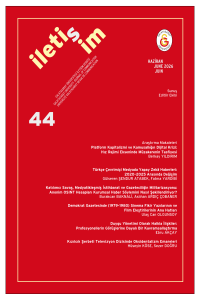
Yıl 2025, Sayı: 43, 63 - 87, 25.12.2025

Öz

Bu çalışmada, üretici yapay zekâ araçlarının Türkiye’deki haber merkezlerinde kullanım sıklığı ve gazetecilerin gündelik iş akışında yol açtığı dönüşüm araştırılmaktadır. Nicel ve nitel yöntemlerle yürütülen araştırmada Türkiye’deki medya düzeni tekil bir sistem olarak değil, siyasal baskı, politik paralellik ve kaynak eşitsizliği üzerinden şekillenen “melez” bir yapı olarak ele alınmıştır. Bu çerçevede, yapay zekâ araçlarının gazeteciler tarafından yoğun olarak kullanıldığı saptanmış ancak bunların etik kullanımına ilişkin kapsamlı stratejilerin bulunmadığı ortaya çıkmıştır. Bu araçların haber kalitesine ve istihdama etkileri ise salt kurumların maddi olanakları üzerinden tanımlanamamaktadır. Teknolojiyle kurulan ilişki, farklı kurumların ve bu kuruluşlarda çalışan gazetecilerin meslek normlarına bağlılığı çerçevesinde değişiklik göstermektedir. Kamu yararı odaklı gazetecilik ilkelerine bağlı ve özel haber öncelikli üretim yaptığını söyleyen gazetecilerin, bu yeni teknolojinin ortaya koyduğu risklere karşı daha dirençli oldukları gözlenmiştir. Bu bağlamda, yapay zekânın gazeteciliğe etkileri konusunda uluslararası ölçekteki gelişmelerin mesleğe etkileri tartışılırken, yerel farklılıkların göz önüne alınmasının gerekliliği ortaya çıkmaktadır.

Kaynakça

  • Adaklı, G. (2014). Medya sermayesi ve ultra-çapraz bütünleşmeler. Perspectives, 8, 18-23.
  • Akser, M. ve Baybars, B. (2024). Media systems and media capture in Turkey: A case study. Media and Communication, 12. 1-17. https://doi.org/10.17645/mac.7733
  • Akser, M. ve McCollum, V. (Ed). (2021). Alternative media in contemporary Turkey: Sustainability, activism, and resistance. Rowman & Littlefield.
  • Avşar, B. (12 Mart 2025). Gazete Duvar için veda vakti... Gazete Duvar. Erişim 15.08.2025, https://www.gazeteduvar.com.tr/gazete-duvar-icin-veda-vakti-makale-1763423
  • Beckett, C. ve Yaseen, M. (2023). Generating change. A global survey of what news organisations are doing with AI. JournalismAI Project, London School of Economics.
  • Carlson, M. (2014). The robotic reporter: Automated journalism and the redefinition of labor, compositional forms, and journalistic authority. Digital Journalism, 3(3), 416–431. https://doi.org/10.1080/21670811.2014.976412
  • Cools, H. ve Diakopoulos, N. (2024). Uses of generative AI in the newsroom: Mapping journalists’ perceptions of perils and possibilities. Journalism Practice, 1–19. https://doi.org/10.1080/17512786.2024.2394558
  • Çenberli, Y. (2025). Incursion of Artificial Intelligence into News Production: Will AI Revive Journalism? OPUS Journal of Society Research, 22(5), 1032–1045. https://doi.org/10.26466/opusjsr.1743749
  • Çevikel, T. (2023). Türkiye’de dijital doğumlu haber siteleri: Sınırlılıklar ve olanaklar. In V. M. Ayan & E. T. Keten (Ed.), Anaakım çökerken alternatif medyanın eleştirisi (91–110). Ankara: um:ag Vakfı Yayınları.
  • Creswell, J. W. & Plano Clark, V. (2018). Karma yöntem araştırmaları tasarım ve yürütülmesi. (Y. Dede, S. B. Demir, Çev.). Ankara: Anı Yayıncılık.
  • Demirdiş, S. (2025). Turkish journalists' attitudes, perceived constraints, and knowledge about AI in journalism. Yeni Medya, (18), 1–20.
  • Deuze, M. ve Beckett, C. (2022). Imagination, algorithms and news: Developing AI literacy for journalism. Digital Journalism, 10(10), 1913–1918. https://doi.org/10.1080/21670811.2022.2119152
  • Diakopoulos, N. (2019). Automating the news: How algorithms are rewriting the media. Cambridge, Massachusets: Harvard University Press.
  • Diakopoulos, N., Cools, H., Li, C., Helberger, N., Kung, E., Rinehart, A. ve Gibbs, L. (2024). Generative AI in journalism: The evolution of newswork and ethics in a generative information ecosystem. Associated Press. https://rgdoi.net/10.13140/RG.2.2.31540.05765
  • Diken. (22 Temmuz 2023). CHP: Halk TV’yle tüm ilişkimiz sona ermiştir. Erişim15 Temmuz 2025, https://www.diken.com.tr/chp-halk-tvyle-tum-iliskimiz-sona-ermistir/
  • Erdoğan, E., & Erçetin, T. (2019). Popülist liderlerinin başarısına medya sistemleri perspektifinden bir bakış: Birleşik Krallık, Hollanda ve Türkiye karşılaştırması. Moment Dergi, 6(1), 38–74. https://doi.org/10.17572/mj2019.1.3874
  • Ertuna, C. (2023). “Whose voice resonates?” A study on the news content of four alternative digital-native news websites in Turkey. OPUS Journal of Society Research, 20(55), 533–549. https://doi.org/10.26466/opusjsr.1347398
  • Etike, Ş. (2023). Türkiye’deki haber merkezlerinde yapay zekâ teknolojileri: Gazeteci deneyimleri ve algısı. In Yeni medya ve toplumsal dönüşümler (pp. 398–428). Ankara: Ütopya Yayınevi.
  • Gencel Bek, M. (2014). Karşılaştırmalı perspektiften Türkiye’de medya sistemi. Mülkiye Dergisi, 34(269), 101–125.
  • Hallin, D. C. ve Mancini, P. (2004). Comparing media systems: Three models of media and politics. Cambridge: Cambridge University Press.
  • Hallin, D. C. ve Mancini, P. (Ed.). (2012). Comparing media systems beyond the Western world. Cambridge: Cambridge University Press.
  • Ioscote, F., Gonçalves, A. ve Quadros, C. (2024). Artificial intelligence in journalism: A ten-year retrospective of scientific articles (2014–2023). Journalism and Media, 5(3), 873–891. https://doi.org/10.3390/journalmedia5030056
  • Kaya, R. ve Çakmur, B. (2010). Politics and the mass media in Turkey. Turkish Studies, 11(4), 521–537. https://doi.org/10.1080/14683849.2010.540112
  • Kırık, A. M., Göksu, O., & Yegen, C. (2024). Yapay zekâ ve gazetecilik: Türk medyasında ChatGPT kullanımı. İletişim Kuram ve Araştırma Dergisi, (68), 90–109.
  • Kovach, B. ve Rosenstiel, T. (2021). The elements of journalism (Rev. & updated 4th ed.). New York: Crown.
  • Lorenz, P., Perset, K. ve Berryhill, J. (2023). Initial policy considerations for generative artificial intelligence (No. 1). OECD Publishing.
  • Miles, M. B. ve Huberman, A. M. (1994). Qualitative data analysis (2. bs.). Thousand Oaks, CA: Sage.
  • Newman, N. ve Cherubini, F. (2025). Journalism, media, and technology trends and predictions 2025. Reuters Institute for the Study of Journalism, University of Oxford. https://reutersinstitute.politics.ox.ac.uk/journalism-media-and-technology-trends-and-predictions-2025
  • Pavlik, J. (2000). The impact of technology on journalism. Journalism Studies, 1(2), 229–237. https://doi.org/10.1080/14616700050028226
  • Schudson, M. (2003). The sociology of news. New York: W. W. Norton.
  • Shi, Y. ve Sun, L. (2024). How generative AI is transforming journalism: Development, application and ethics. Journalism and Media, 5(2), 582-594. https://doi.org/10.3390/journalmedia5020039
  • Simon, F. M. (2023). Escape me if you can: How AI reshapes news organisations’ dependency on platform companies. Digital Journalism, 12(2), 149–170. https://doi.org/10.1080/21670811.2023.2287464
  • Sözeri, C. ve Güney, Z. (2011). The political economy of the media in Turkey: A sectoral analysis. İstanbul: Tesev.
  • van Dalen, A. (2012). The algorithms behind headlines: How machine-written news redefines the core skills of human journalists. Journalism Practice, 6(5–6), 648–658. https://doi.org/10.1080/17512786.2012.667268
  • Wu, S. (2024). Journalists as individual users of artificial intelligence: Examining journalists’ “value-motivated use” of ChatGPT and other AI tools within and without the newsroom. Journalism, 0(0). https://doi.org/10.1177/14648849241303047
  • Yeşil, B. (2018). Authoritarian turn or continuity? Governance of media through capture and discipline in the AKP era. South European Society & Politics, 23(2), 239–257. https://doi.org/10.1080/13608746.2018.1487137

Artificial Intelligence and Journalism in Turkey: Technological Transformation in a Polarised and Unequal Media Environment

Yıl 2025, Sayı: 43, 63 - 87, 25.12.2025

Öz

This study examines the extent to which generative artificial intelligence tools are used in Turkish newsrooms and the transformations they bring to journalists’ daily workflows. Employing both quantitative and qualitative methods, the research conceptualises the Turkish media system as a “hybrid” structure shaped by political pressure, political parallelism, and resource inequality. Findings indicate that journalists make substantial use of AI tools, yet comprehensive strategies for their ethical application are absent. The effects of these tools on news quality and employment cannot be explained solely by the financial capacities of media organisations. Rather, the relationship developed with these technologies varies by levels of adherence to the professional norms embraced by different media organisations and journalists. The study highlights that while the effects of AI in journalism are being evaluated with an international scope, accounting for local nuances remains essential.

Kaynakça

  • Adaklı, G. (2014). Medya sermayesi ve ultra-çapraz bütünleşmeler. Perspectives, 8, 18-23.
  • Akser, M. ve Baybars, B. (2024). Media systems and media capture in Turkey: A case study. Media and Communication, 12. 1-17. https://doi.org/10.17645/mac.7733
  • Akser, M. ve McCollum, V. (Ed). (2021). Alternative media in contemporary Turkey: Sustainability, activism, and resistance. Rowman & Littlefield.
  • Avşar, B. (12 Mart 2025). Gazete Duvar için veda vakti... Gazete Duvar. Erişim 15.08.2025, https://www.gazeteduvar.com.tr/gazete-duvar-icin-veda-vakti-makale-1763423
  • Beckett, C. ve Yaseen, M. (2023). Generating change. A global survey of what news organisations are doing with AI. JournalismAI Project, London School of Economics.
  • Carlson, M. (2014). The robotic reporter: Automated journalism and the redefinition of labor, compositional forms, and journalistic authority. Digital Journalism, 3(3), 416–431. https://doi.org/10.1080/21670811.2014.976412
  • Cools, H. ve Diakopoulos, N. (2024). Uses of generative AI in the newsroom: Mapping journalists’ perceptions of perils and possibilities. Journalism Practice, 1–19. https://doi.org/10.1080/17512786.2024.2394558
  • Çenberli, Y. (2025). Incursion of Artificial Intelligence into News Production: Will AI Revive Journalism? OPUS Journal of Society Research, 22(5), 1032–1045. https://doi.org/10.26466/opusjsr.1743749
  • Çevikel, T. (2023). Türkiye’de dijital doğumlu haber siteleri: Sınırlılıklar ve olanaklar. In V. M. Ayan & E. T. Keten (Ed.), Anaakım çökerken alternatif medyanın eleştirisi (91–110). Ankara: um:ag Vakfı Yayınları.
  • Creswell, J. W. & Plano Clark, V. (2018). Karma yöntem araştırmaları tasarım ve yürütülmesi. (Y. Dede, S. B. Demir, Çev.). Ankara: Anı Yayıncılık.
  • Demirdiş, S. (2025). Turkish journalists' attitudes, perceived constraints, and knowledge about AI in journalism. Yeni Medya, (18), 1–20.
  • Deuze, M. ve Beckett, C. (2022). Imagination, algorithms and news: Developing AI literacy for journalism. Digital Journalism, 10(10), 1913–1918. https://doi.org/10.1080/21670811.2022.2119152
  • Diakopoulos, N. (2019). Automating the news: How algorithms are rewriting the media. Cambridge, Massachusets: Harvard University Press.
  • Diakopoulos, N., Cools, H., Li, C., Helberger, N., Kung, E., Rinehart, A. ve Gibbs, L. (2024). Generative AI in journalism: The evolution of newswork and ethics in a generative information ecosystem. Associated Press. https://rgdoi.net/10.13140/RG.2.2.31540.05765
  • Diken. (22 Temmuz 2023). CHP: Halk TV’yle tüm ilişkimiz sona ermiştir. Erişim15 Temmuz 2025, https://www.diken.com.tr/chp-halk-tvyle-tum-iliskimiz-sona-ermistir/
  • Erdoğan, E., & Erçetin, T. (2019). Popülist liderlerinin başarısına medya sistemleri perspektifinden bir bakış: Birleşik Krallık, Hollanda ve Türkiye karşılaştırması. Moment Dergi, 6(1), 38–74. https://doi.org/10.17572/mj2019.1.3874
  • Ertuna, C. (2023). “Whose voice resonates?” A study on the news content of four alternative digital-native news websites in Turkey. OPUS Journal of Society Research, 20(55), 533–549. https://doi.org/10.26466/opusjsr.1347398
  • Etike, Ş. (2023). Türkiye’deki haber merkezlerinde yapay zekâ teknolojileri: Gazeteci deneyimleri ve algısı. In Yeni medya ve toplumsal dönüşümler (pp. 398–428). Ankara: Ütopya Yayınevi.
  • Gencel Bek, M. (2014). Karşılaştırmalı perspektiften Türkiye’de medya sistemi. Mülkiye Dergisi, 34(269), 101–125.
  • Hallin, D. C. ve Mancini, P. (2004). Comparing media systems: Three models of media and politics. Cambridge: Cambridge University Press.
  • Hallin, D. C. ve Mancini, P. (Ed.). (2012). Comparing media systems beyond the Western world. Cambridge: Cambridge University Press.
  • Ioscote, F., Gonçalves, A. ve Quadros, C. (2024). Artificial intelligence in journalism: A ten-year retrospective of scientific articles (2014–2023). Journalism and Media, 5(3), 873–891. https://doi.org/10.3390/journalmedia5030056
  • Kaya, R. ve Çakmur, B. (2010). Politics and the mass media in Turkey. Turkish Studies, 11(4), 521–537. https://doi.org/10.1080/14683849.2010.540112
  • Kırık, A. M., Göksu, O., & Yegen, C. (2024). Yapay zekâ ve gazetecilik: Türk medyasında ChatGPT kullanımı. İletişim Kuram ve Araştırma Dergisi, (68), 90–109.
  • Kovach, B. ve Rosenstiel, T. (2021). The elements of journalism (Rev. & updated 4th ed.). New York: Crown.
  • Lorenz, P., Perset, K. ve Berryhill, J. (2023). Initial policy considerations for generative artificial intelligence (No. 1). OECD Publishing.
  • Miles, M. B. ve Huberman, A. M. (1994). Qualitative data analysis (2. bs.). Thousand Oaks, CA: Sage.
  • Newman, N. ve Cherubini, F. (2025). Journalism, media, and technology trends and predictions 2025. Reuters Institute for the Study of Journalism, University of Oxford. https://reutersinstitute.politics.ox.ac.uk/journalism-media-and-technology-trends-and-predictions-2025
  • Pavlik, J. (2000). The impact of technology on journalism. Journalism Studies, 1(2), 229–237. https://doi.org/10.1080/14616700050028226
  • Schudson, M. (2003). The sociology of news. New York: W. W. Norton.
  • Shi, Y. ve Sun, L. (2024). How generative AI is transforming journalism: Development, application and ethics. Journalism and Media, 5(2), 582-594. https://doi.org/10.3390/journalmedia5020039
  • Simon, F. M. (2023). Escape me if you can: How AI reshapes news organisations’ dependency on platform companies. Digital Journalism, 12(2), 149–170. https://doi.org/10.1080/21670811.2023.2287464
  • Sözeri, C. ve Güney, Z. (2011). The political economy of the media in Turkey: A sectoral analysis. İstanbul: Tesev.
  • van Dalen, A. (2012). The algorithms behind headlines: How machine-written news redefines the core skills of human journalists. Journalism Practice, 6(5–6), 648–658. https://doi.org/10.1080/17512786.2012.667268
  • Wu, S. (2024). Journalists as individual users of artificial intelligence: Examining journalists’ “value-motivated use” of ChatGPT and other AI tools within and without the newsroom. Journalism, 0(0). https://doi.org/10.1177/14648849241303047
  • Yeşil, B. (2018). Authoritarian turn or continuity? Governance of media through capture and discipline in the AKP era. South European Society & Politics, 23(2), 239–257. https://doi.org/10.1080/13608746.2018.1487137

Intelligence artificielle et journalisme en Turquie: transformation technologique dans un environnement médiatique polarisé et inégal

Yıl 2025, Sayı: 43, 63 - 87, 25.12.2025

Öz

Cette étude analyse l’ampleur de l’usage des outils d’intelligence artificielle générative dans les rédactions turques ainsi que les transformations qu’ils induisent dans les flux de travail quotidiens des journalistes. En mobilisant des méthodes quantitatives et qualitatives, la recherche conçoit le système médiatique turc non pas comme une entité homogène, mais comme une structure « hybride », façonnée par les pressions politiques, le parallélisme politique et les inégalités de ressources. Les résultats montrent un recours marqué à ces outils, en l’absence toutefois de stratégies globales encadrant leur usage éthique. Leurs effets sur la qualité de l’information et l’emploi ne se réduisent pas aux seules capacités matérielles des organisations médiatiques. Le rapport à la technologie varie selon le degré d’attachement aux normes professionnelles. L’étude souligne enfin que, si les débats internationaux offrent des repères, la prise en compte des spécificités locales demeure indispensable.

Kaynakça

  • Adaklı, G. (2014). Medya sermayesi ve ultra-çapraz bütünleşmeler. Perspectives, 8, 18-23.
  • Akser, M. ve Baybars, B. (2024). Media systems and media capture in Turkey: A case study. Media and Communication, 12. 1-17. https://doi.org/10.17645/mac.7733
  • Akser, M. ve McCollum, V. (Ed). (2021). Alternative media in contemporary Turkey: Sustainability, activism, and resistance. Rowman & Littlefield.
  • Avşar, B. (12 Mart 2025). Gazete Duvar için veda vakti... Gazete Duvar. Erişim 15.08.2025, https://www.gazeteduvar.com.tr/gazete-duvar-icin-veda-vakti-makale-1763423
  • Beckett, C. ve Yaseen, M. (2023). Generating change. A global survey of what news organisations are doing with AI. JournalismAI Project, London School of Economics.
  • Carlson, M. (2014). The robotic reporter: Automated journalism and the redefinition of labor, compositional forms, and journalistic authority. Digital Journalism, 3(3), 416–431. https://doi.org/10.1080/21670811.2014.976412
  • Cools, H. ve Diakopoulos, N. (2024). Uses of generative AI in the newsroom: Mapping journalists’ perceptions of perils and possibilities. Journalism Practice, 1–19. https://doi.org/10.1080/17512786.2024.2394558
  • Çenberli, Y. (2025). Incursion of Artificial Intelligence into News Production: Will AI Revive Journalism? OPUS Journal of Society Research, 22(5), 1032–1045. https://doi.org/10.26466/opusjsr.1743749
  • Çevikel, T. (2023). Türkiye’de dijital doğumlu haber siteleri: Sınırlılıklar ve olanaklar. In V. M. Ayan & E. T. Keten (Ed.), Anaakım çökerken alternatif medyanın eleştirisi (91–110). Ankara: um:ag Vakfı Yayınları.
  • Creswell, J. W. & Plano Clark, V. (2018). Karma yöntem araştırmaları tasarım ve yürütülmesi. (Y. Dede, S. B. Demir, Çev.). Ankara: Anı Yayıncılık.
  • Demirdiş, S. (2025). Turkish journalists' attitudes, perceived constraints, and knowledge about AI in journalism. Yeni Medya, (18), 1–20.
  • Deuze, M. ve Beckett, C. (2022). Imagination, algorithms and news: Developing AI literacy for journalism. Digital Journalism, 10(10), 1913–1918. https://doi.org/10.1080/21670811.2022.2119152
  • Diakopoulos, N. (2019). Automating the news: How algorithms are rewriting the media. Cambridge, Massachusets: Harvard University Press.
  • Diakopoulos, N., Cools, H., Li, C., Helberger, N., Kung, E., Rinehart, A. ve Gibbs, L. (2024). Generative AI in journalism: The evolution of newswork and ethics in a generative information ecosystem. Associated Press. https://rgdoi.net/10.13140/RG.2.2.31540.05765
  • Diken. (22 Temmuz 2023). CHP: Halk TV’yle tüm ilişkimiz sona ermiştir. Erişim15 Temmuz 2025, https://www.diken.com.tr/chp-halk-tvyle-tum-iliskimiz-sona-ermistir/
  • Erdoğan, E., & Erçetin, T. (2019). Popülist liderlerinin başarısına medya sistemleri perspektifinden bir bakış: Birleşik Krallık, Hollanda ve Türkiye karşılaştırması. Moment Dergi, 6(1), 38–74. https://doi.org/10.17572/mj2019.1.3874
  • Ertuna, C. (2023). “Whose voice resonates?” A study on the news content of four alternative digital-native news websites in Turkey. OPUS Journal of Society Research, 20(55), 533–549. https://doi.org/10.26466/opusjsr.1347398
  • Etike, Ş. (2023). Türkiye’deki haber merkezlerinde yapay zekâ teknolojileri: Gazeteci deneyimleri ve algısı. In Yeni medya ve toplumsal dönüşümler (pp. 398–428). Ankara: Ütopya Yayınevi.
  • Gencel Bek, M. (2014). Karşılaştırmalı perspektiften Türkiye’de medya sistemi. Mülkiye Dergisi, 34(269), 101–125.
  • Hallin, D. C. ve Mancini, P. (2004). Comparing media systems: Three models of media and politics. Cambridge: Cambridge University Press.
  • Hallin, D. C. ve Mancini, P. (Ed.). (2012). Comparing media systems beyond the Western world. Cambridge: Cambridge University Press.
  • Ioscote, F., Gonçalves, A. ve Quadros, C. (2024). Artificial intelligence in journalism: A ten-year retrospective of scientific articles (2014–2023). Journalism and Media, 5(3), 873–891. https://doi.org/10.3390/journalmedia5030056
  • Kaya, R. ve Çakmur, B. (2010). Politics and the mass media in Turkey. Turkish Studies, 11(4), 521–537. https://doi.org/10.1080/14683849.2010.540112
  • Kırık, A. M., Göksu, O., & Yegen, C. (2024). Yapay zekâ ve gazetecilik: Türk medyasında ChatGPT kullanımı. İletişim Kuram ve Araştırma Dergisi, (68), 90–109.
  • Kovach, B. ve Rosenstiel, T. (2021). The elements of journalism (Rev. & updated 4th ed.). New York: Crown.
  • Lorenz, P., Perset, K. ve Berryhill, J. (2023). Initial policy considerations for generative artificial intelligence (No. 1). OECD Publishing.
  • Miles, M. B. ve Huberman, A. M. (1994). Qualitative data analysis (2. bs.). Thousand Oaks, CA: Sage.
  • Newman, N. ve Cherubini, F. (2025). Journalism, media, and technology trends and predictions 2025. Reuters Institute for the Study of Journalism, University of Oxford. https://reutersinstitute.politics.ox.ac.uk/journalism-media-and-technology-trends-and-predictions-2025
  • Pavlik, J. (2000). The impact of technology on journalism. Journalism Studies, 1(2), 229–237. https://doi.org/10.1080/14616700050028226
  • Schudson, M. (2003). The sociology of news. New York: W. W. Norton.
  • Shi, Y. ve Sun, L. (2024). How generative AI is transforming journalism: Development, application and ethics. Journalism and Media, 5(2), 582-594. https://doi.org/10.3390/journalmedia5020039
  • Simon, F. M. (2023). Escape me if you can: How AI reshapes news organisations’ dependency on platform companies. Digital Journalism, 12(2), 149–170. https://doi.org/10.1080/21670811.2023.2287464
  • Sözeri, C. ve Güney, Z. (2011). The political economy of the media in Turkey: A sectoral analysis. İstanbul: Tesev.
  • van Dalen, A. (2012). The algorithms behind headlines: How machine-written news redefines the core skills of human journalists. Journalism Practice, 6(5–6), 648–658. https://doi.org/10.1080/17512786.2012.667268
  • Wu, S. (2024). Journalists as individual users of artificial intelligence: Examining journalists’ “value-motivated use” of ChatGPT and other AI tools within and without the newsroom. Journalism, 0(0). https://doi.org/10.1177/14648849241303047
  • Yeşil, B. (2018). Authoritarian turn or continuity? Governance of media through capture and discipline in the AKP era. South European Society & Politics, 23(2), 239–257. https://doi.org/10.1080/13608746.2018.1487137
Toplam 36 adet kaynakça vardır.

Ayrıntılar

Birincil Dil Türkçe
Konular Gazetecilik Çalışmaları
Bölüm Araştırma Makalesi
Yazarlar

Can Ertuna 0000-0002-3734-7345

Gönderilme Tarihi 29 Ağustos 2025
Kabul Tarihi 12 Aralık 2025
Yayımlanma Tarihi 25 Aralık 2025
Yayımlandığı Sayı Yıl 2025 Sayı: 43

Kaynak Göster

APA Ertuna, C. (2025). Türkiye’de Yapay Zekâ ve Gazetecilik: Kutuplaşmış, Eşitsiz Bir Medya Ortamında Teknolojik Dönüşüm. Galatasaray Üniversitesi İletişim Dergisi(43), 63-87. https://doi.org/10.16878/gsuilet.1773888

Creative Commons Lisansı TRDizinlogo_live-e1586763957746.png